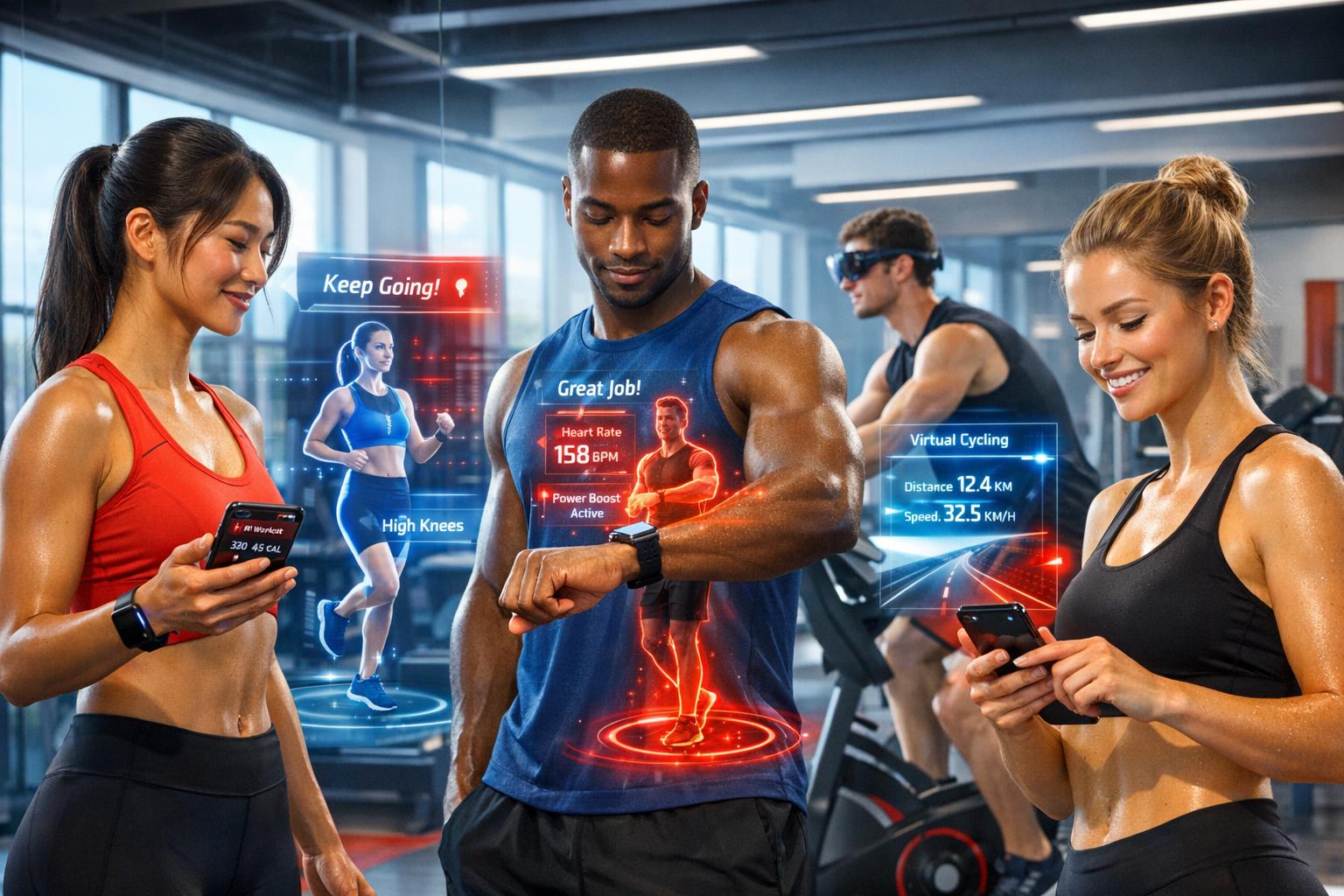
Looking for the best fitness apps in 2026? Here’s a quick rundown of the top options that cater to various fitness goals, from cardio and strength training to women-focused programs and interactive experiences.
- Strava: Best for outdoor cardio enthusiasts with social features and advanced metrics. Free version available; premium starts at $11.99/month.
- Runna: Tailored running plans for all levels, including strength and mobility exercises. Starts at $19.99/month.
- Zwift: Turns indoor cycling and running into a gamified experience with virtual worlds and group rides. Costs $19.99/month.
- Hevy: Perfect for gym-goers, offering detailed strength tracking tools. Free version available; pro starts at $2.99/month.
- Fitbod: AI-powered strength training customized to your equipment and recovery needs. Starts at $19.99/month.
- EvolveYou: Women-focused workouts and wellness programs with nutrition support. Costs $19.99/month.
- Sweat: Offers structured programs for women, including pregnancy and post-pregnancy fitness. Starts at $25/month.
- SmartGym: AI-driven workout routines with Apple Watch integration. Free version available; premium unlocks advanced features.
- Google Fit: Free activity tracker with AI coaching for personalized health recommendations.
- Sports And Fitness Apps: All-in-one platform with a 3D exercise library and custom workouts. Free version available.
These apps offer a mix of free and paid plans, catering to different fitness needs and preferences. Whether you’re into running, cycling, strength training, or holistic fitness, there’s something here for everyone. Many offer free trials, so you can test them before committing.
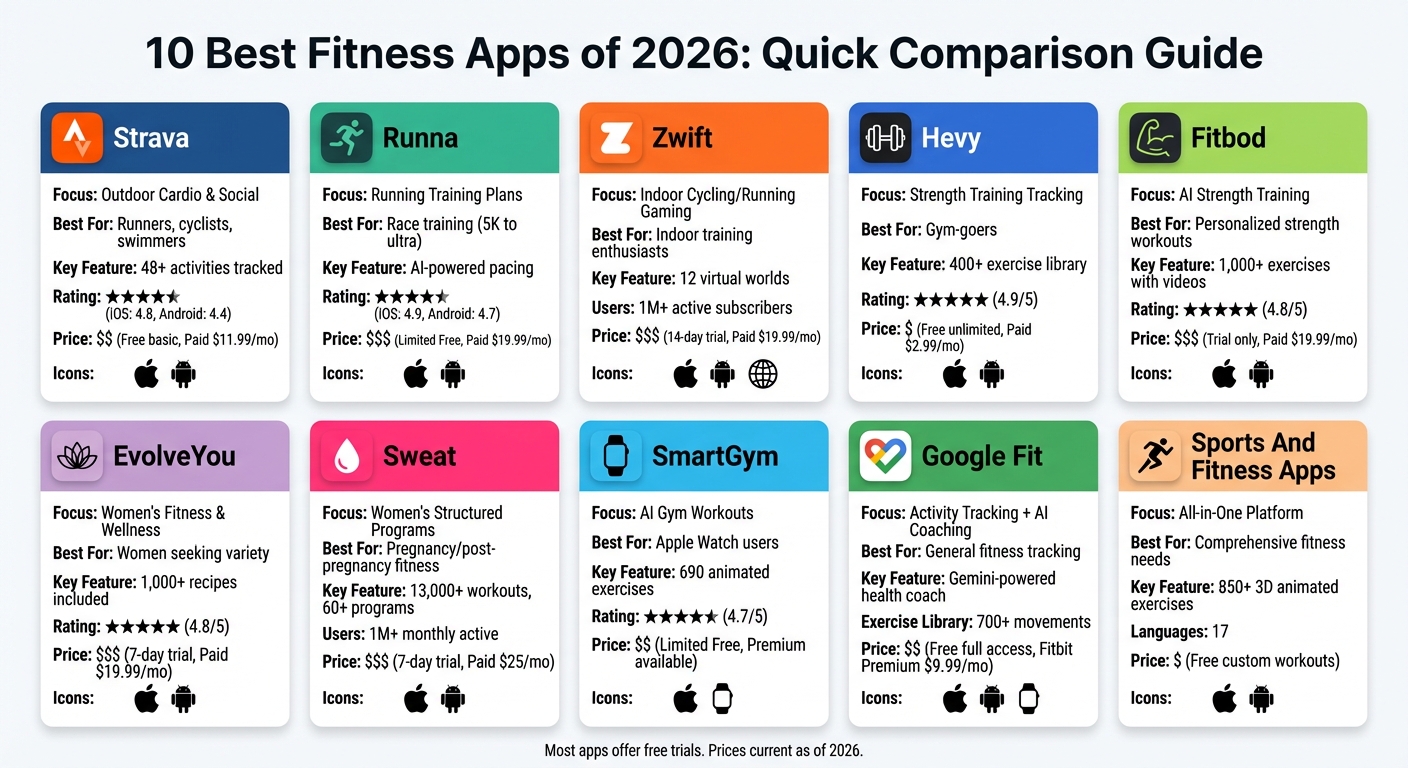
Best Fitness Apps 2026: Features, Pricing & Compatibility Comparison
8 ACTUALLY USEFUL Fitness Apps in 2026
1. Strava
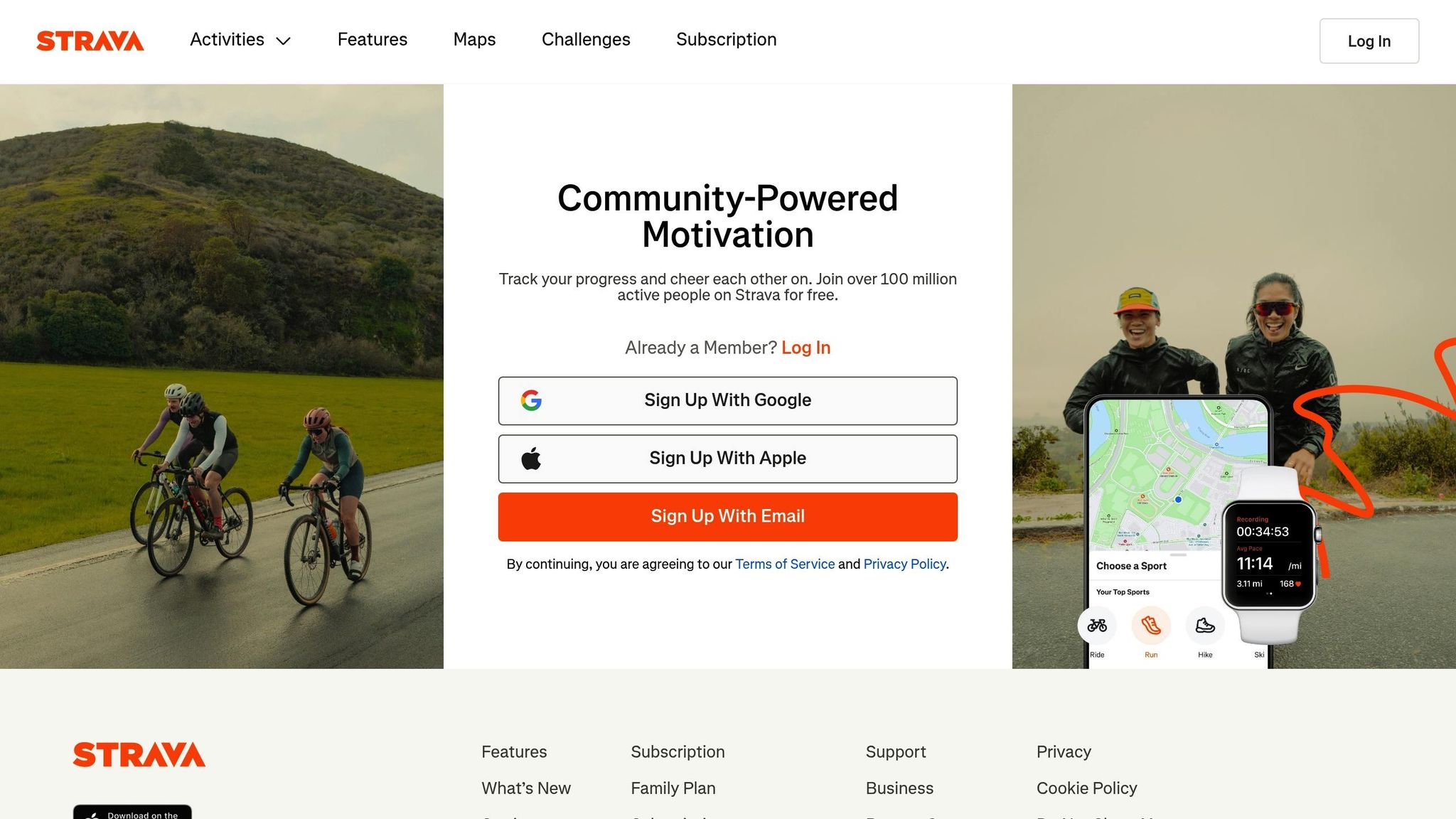
Strava stands out as a favorite among runners, cyclists, and swimmers. It supports tracking for over 48 different activities – ranging from running and cycling to more niche sports. With a 4.8/5 rating on the Apple App Store from over 306,000 reviews and a 4.4/5 rating on Google Play from nearly 921,000 reviews, it’s clear why cardio enthusiasts swear by this app. But Strava isn’t just about tracking – it’s also a vibrant social platform.
What sets Strava apart is its ability to combine performance tracking with social interaction. Users can connect with other athletes, join clubs, take part in challenges, and give "kudos" to celebrate workouts. The Beacon feature adds a layer of safety, allowing you to share your real-time location with up to three trusted contacts during solo outdoor activities. For premium users, advanced metrics like Relative Effort offer insights into workout intensity beyond just pace or speed. Ben Emminger, NASM-CNC, highlights this feature:
"One metric I’ve really come to enjoy is the ‘Relative Effort’ statistic, which showcases your effort in a workout rather than just your pace or speed".
Strava also integrates seamlessly with most major wearables, including Apple Watch, Garmin, Fitbit, Wahoo, Polar, Suunto, and Oura. Premium users unlock extra features like custom route planning, offline maps, personal heatmaps to visualize trained muscle groups, and full access to segment leaderboards.
The app offers a free version with basic GPS tracking and social features. For those looking for more, Strava Premium is available for $11.99 per month or $79.99 annually, with a Family Plan priced at $139.99 per year for up to six members. There’s also a 30-day free trial to explore the premium perks.
One downside? Strava doesn’t offer much for traditional gym or strength training workouts. However, for cardio-focused athletes, it remains a top-tier choice.
2. Runna
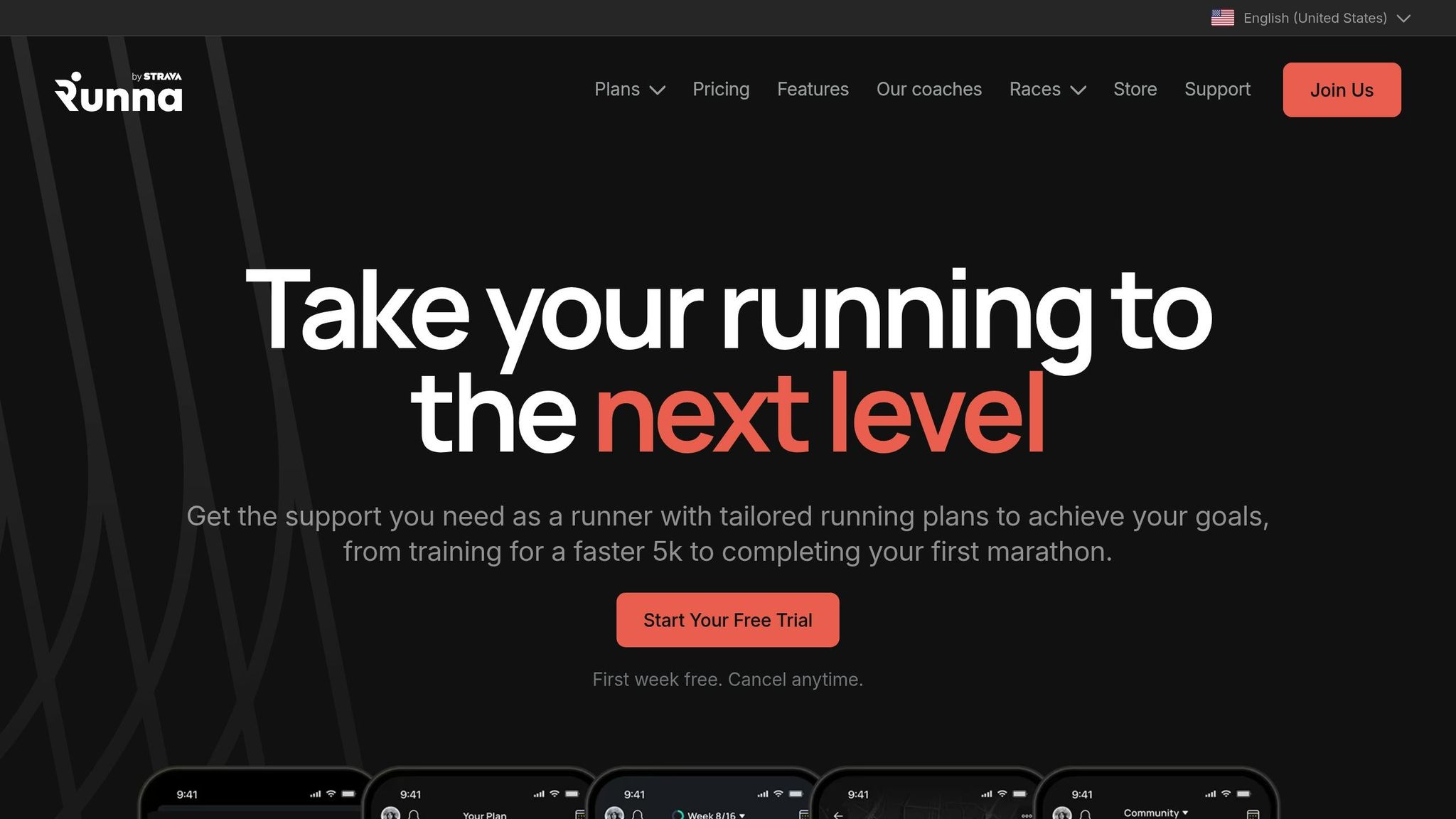
Runna offers tailored, structured training programs designed to elevate your running game. Using its proprietary "Runna Engine", the app creates personalized plans for runners of all levels – whether you’re prepping for your first 5k or tackling a 155-mile ultramarathon. Plans range from 2 to 26 weeks, adapting to your goals and progress.
With a stellar 4.9 rating on the Apple App Store (based on over 76,000 reviews) and a 4.7 on Google Play (with 17,000+ reviews), Runna has earned high praise from its users.
What makes Runna stand out is its dynamic pacing system. Simply input a recent race time, and the app automatically adjusts your paces to match your evolving performance. Beth Skwarecki, Senior Health Editor at Lifehacker, rated it 5/5, highlighting its "satisfying checkboxes" and how it "updates as the user gets faster". Beyond running, the app also includes strength training, mobility exercises, and Pilates to help prevent injuries and improve overall fitness. For interval workouts, tempo runs, and rest periods, Runna provides in-ear coaching with live audio cues, ensuring you stay on track during every session [14,16].
Runna seamlessly integrates with popular devices like the Apple Watch, Garmin, Coros, and Suunto, allowing you to follow your workouts directly from your wrist. Training plans are developed by some of the best in the business, including British Olympian Steph Davis and US Olympian Colleen Quigley. This combination of expert guidance and tech integration makes Runna an all-in-one solution for runners aiming to improve their performance.
One user, Leo, shared his experience:
"The personalized plans enhanced my pace and endurance in weeks."
Pricing: Subscriptions cost $19.99/month or $119.99/year (about $10/month), and new users can take advantage of a 7-day free trial. While there is a basic free version, access to structured training requires a subscription [2,16].
3. Zwift
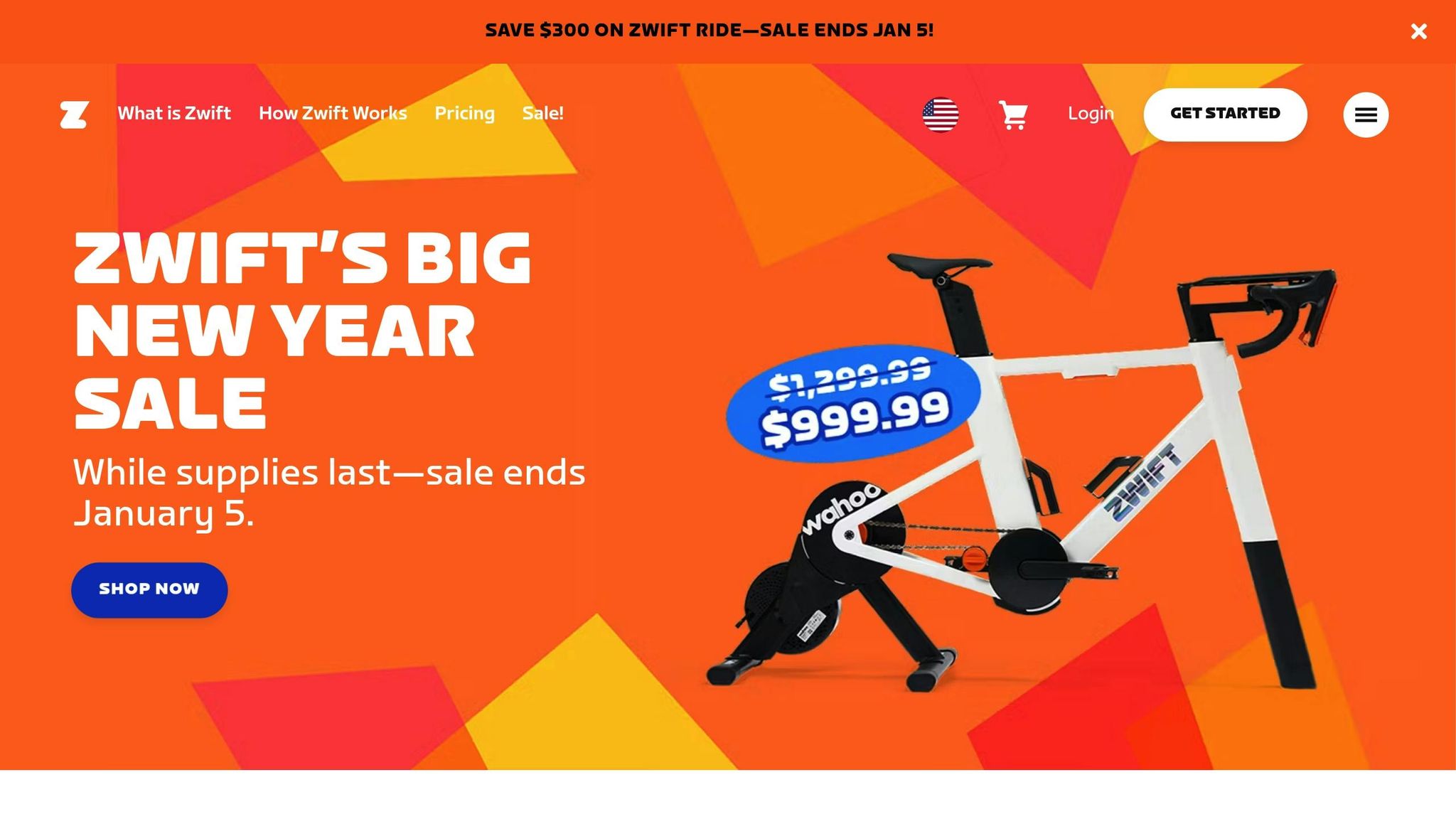
Zwift takes indoor cycling and running to the next level by turning it into an interactive gaming experience. Forget the monotony of traditional indoor training – Zwift lets you ride through 12 virtual worlds like Watopia, London, and the Makuri Islands. Your actual effort powers your onscreen avatar, making every session feel immersive. With over 1 million active subscribers, it’s clear Zwift has struck a chord with fitness enthusiasts.
The app’s gamified features add an extra layer of fun. You can earn experience points (XP) and collect "Drops" – an in-game currency – to unlock gear in the Drop Shop. PowerUps like the Feather (which reduces weight) or Aero Boost (which cuts drag) give you a tactical edge during rides. For fair competition, Zwift uses FTP-based categories ranging from A (4.0+ W/kg) to D (2.4 W/kg and below). Plus, nine RoboPacers – automated bots with pacing from 1.1 W/kg to 4.2 W/kg – offer group rides that adapt to terrain changes.
Zwift is compatible with PC, Mac, iOS, Android, and Apple TV. It connects with smart trainers via Bluetooth or ANT+, adjusting resistance to match the terrain you’re riding. For those who want dedicated hardware, Zwift offers the Zwift Ride Smart Frame for $799.99, or a bundle with the Wahoo Kickr Core for $1,299.99. There’s also the Zwift Cog v2, a single-sprocket cassette paired with Zwift Click wireless controllers, allowing virtual shifting. This setup works with most 8- to 13-speed bikes without needing derailleur adjustments.
Professional cyclist Mathieu Van Der Poel shared his thoughts on Zwift:
"As a professional cyclist, optimizing training time is crucial. With Zwift, I can seamlessly integrate quality sessions into my busy schedule and ride with friends anytime to keep it fun."
Zwift’s pricing is $19.99 per month, with a 14-day free trial available. Alternatively, you can pay $199.99 annually, which gives you 12 months for the price of 10 and includes a 30-day money-back guarantee. Simon von Bromley from BikeRadar described Zwift as "arguably the most fully featured and almost certainly the most popular indoor training app", though he did mention that beginners might find the range of features and equipment a bit overwhelming.
4. Hevy
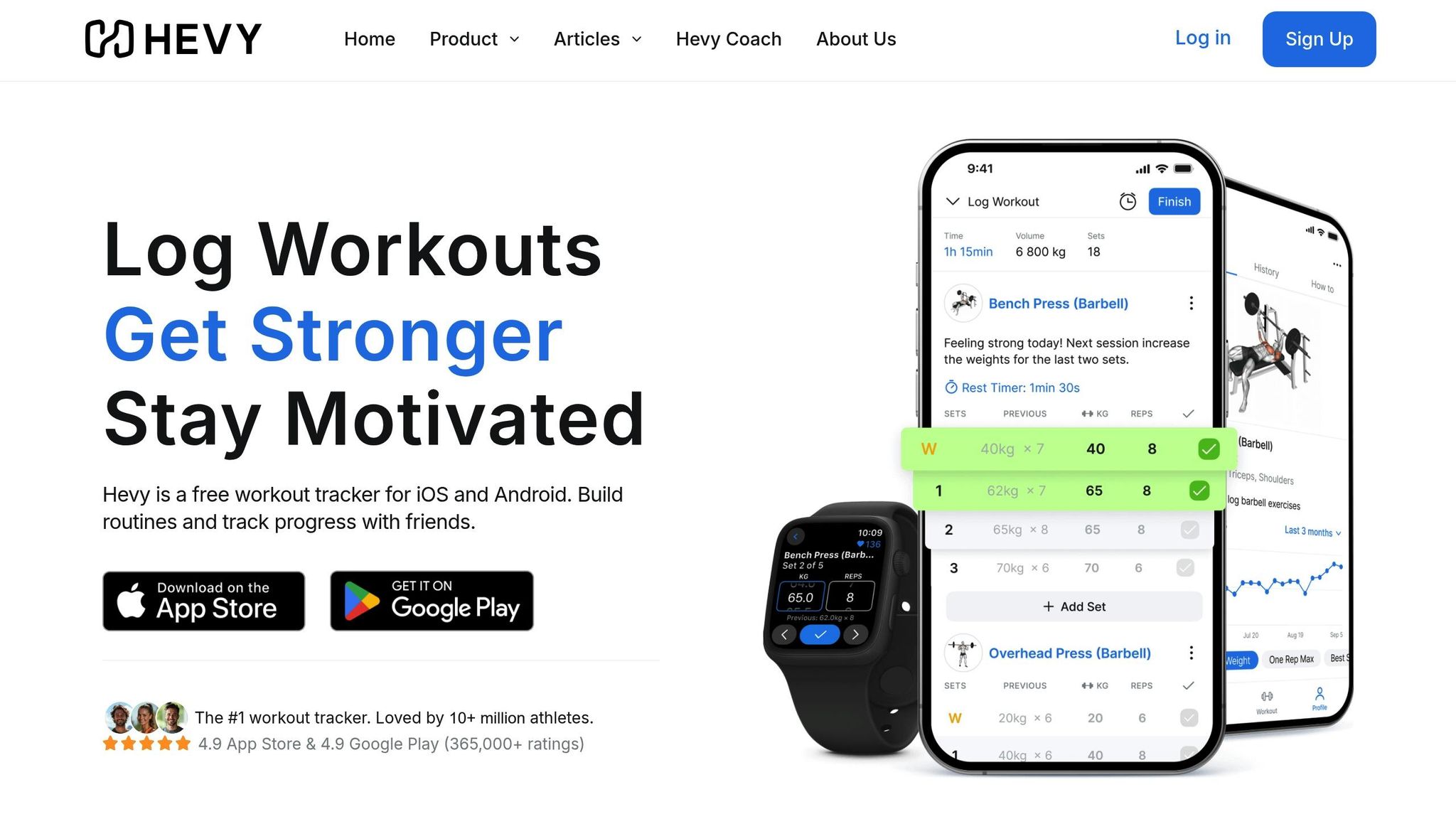
Hevy stands out as a go-to app for strength training enthusiasts, offering precise tools to track your progress in the gym. With over 10 million users and a stellar 4.9/5 rating across the App Store and Google Play from more than 365,000 reviews, it’s clear this app has earned its fan base. Unlike apps focused on cardio or guided workout videos, Hevy is specifically designed as a gym logging tool, allowing users to meticulously track reps, weights, and RPE (Rate of Perceived Exertion). If your goal is strength tracking rather than cardio metrics, this app has you covered.
Hevy simplifies gym sessions with features that take the guesswork out of your workouts. It includes a plate calculator for accurate weight loading, automatic rest timers, and a warm-up set calculator to help you ease into heavier lifts. Users can log various set types – whether it’s warm-ups, drop sets, or sets taken to failure – and the app automatically calculates your total volume lifted. One user, JRR Goyim, shared their experience:
"Recently made the swap from pen and paper for tracking + planning my workouts and it’s been great. I especially like that it calculates your total volume lifted".
The app is available on iOS, Android, Apple Watch, and WearOS, offering a standalone watch mode for those who prefer to train without their phone. It also syncs with Apple Health and Health Connect. A standout feature is the ability to filter workouts by equipment or location, making it easy to find dumbbell-only or bodyweight routines when you’re traveling or working out at home. Plus, Hevy integrates ChatGPT through HevyGPT, providing AI-powered insights to enhance your training.
The free version of Hevy includes unlimited logs, four saved routines, seven custom exercises, and three months of data. For those who want more, the Pro version unlocks features like unlimited routines, full historical data with muscle charts, and body fat tracking. Pricing starts at $2.99/month, $23.99/year, or a one-time $74.99 payment. For dedicated lifters juggling multiple programs, the Pro upgrade is a solid investment.
Hevy’s exercise library boasts over 400 movements, complete with animations and instructions. The app also has a social feed that lets you connect with friends, compare stats on leaderboards, and stay motivated with workout streaks. Sam Ilelaboye, a satisfied user, described it as:
"Seriously the best gym fitness tracker I’ve ever used. Simple. Free. Tons of graphs. Amazing quality videos".
Whether you’re working toward progressive overload or just need an efficient alternative to a notebook, Hevy offers powerful tracking tools without unnecessary complications. It’s a must-try for anyone serious about strength training.
5. Fitbod
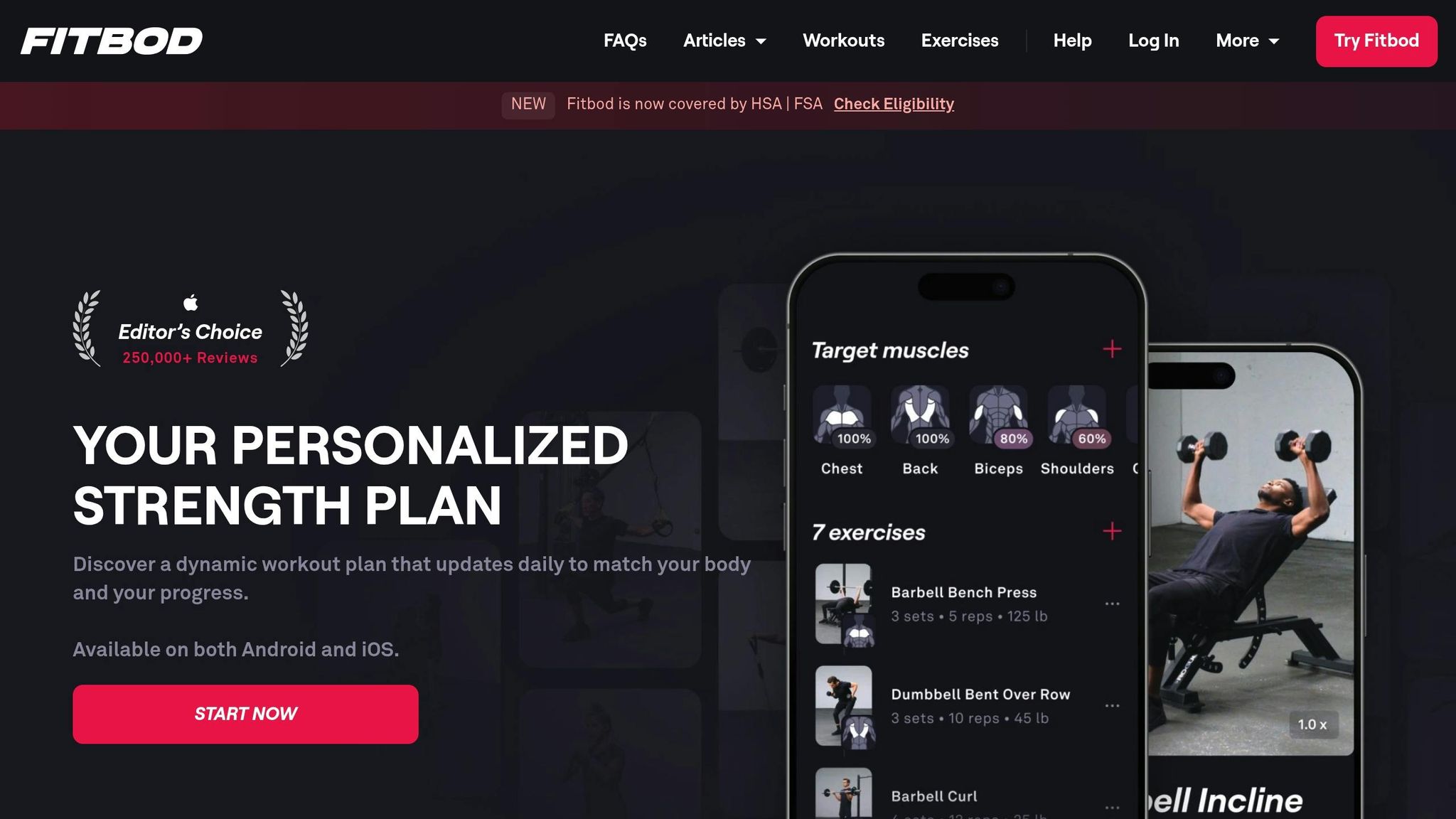
Fitbod takes personalized strength training to a whole new level with its advanced AI technology. This app doesn’t just hand you a cookie-cutter workout plan – it creates sessions tailored to your progress, equipment, and recovery needs. With over 15 million downloads, 120 million workouts logged, and a stellar 4.8-star rating from more than 250,000 reviews, it’s clear Fitbod has struck a chord with fitness enthusiasts. Its unique algorithm analyzes your training history and adjusts workouts to help you build muscle efficiently while minimizing the risk of injury.
One of Fitbod’s standout features is its equipment adaptability. Whether you’re at a fully-stocked gym, working out at home with just a few dumbbells, or relying on bodyweight exercises, the app customizes your workouts based on what you have on hand. You can even set limits, like capping dumbbells at 20 lbs, so the app never suggests equipment you don’t own. This flexibility makes it ideal for frequent travelers or those with minimalist setups. Plus, with a library of over 1,000 exercises, complete with high-resolution, multi-angle video demonstrations, you’ll always know how to perform each movement safely and effectively.
Fitbod also incorporates proven strength-building techniques like progressive overload and non-linear periodization. These strategies help you avoid plateaus by steadily increasing intensity and varying your training. The app tracks your recovery for different muscle groups and uses that data to recommend what to train next. While new users might need to tweak reps and weights initially, the AI quickly learns your limits and adjusts accordingly.
Available on iOS, Android, Apple Watch, and Wear OS, Fitbod is accessible wherever you go. A noteworthy update for 2026 is its HSA and FSA eligibility, meaning you can use pre-tax health dollars to cover your subscription. Pricing is straightforward: $19.99 per month or $119.99 annually, and there’s a 7-day free trial to explore its features. For those seeking smart, customizable training without breaking the bank, Fitbod is a solid choice.
6. EvolveYou
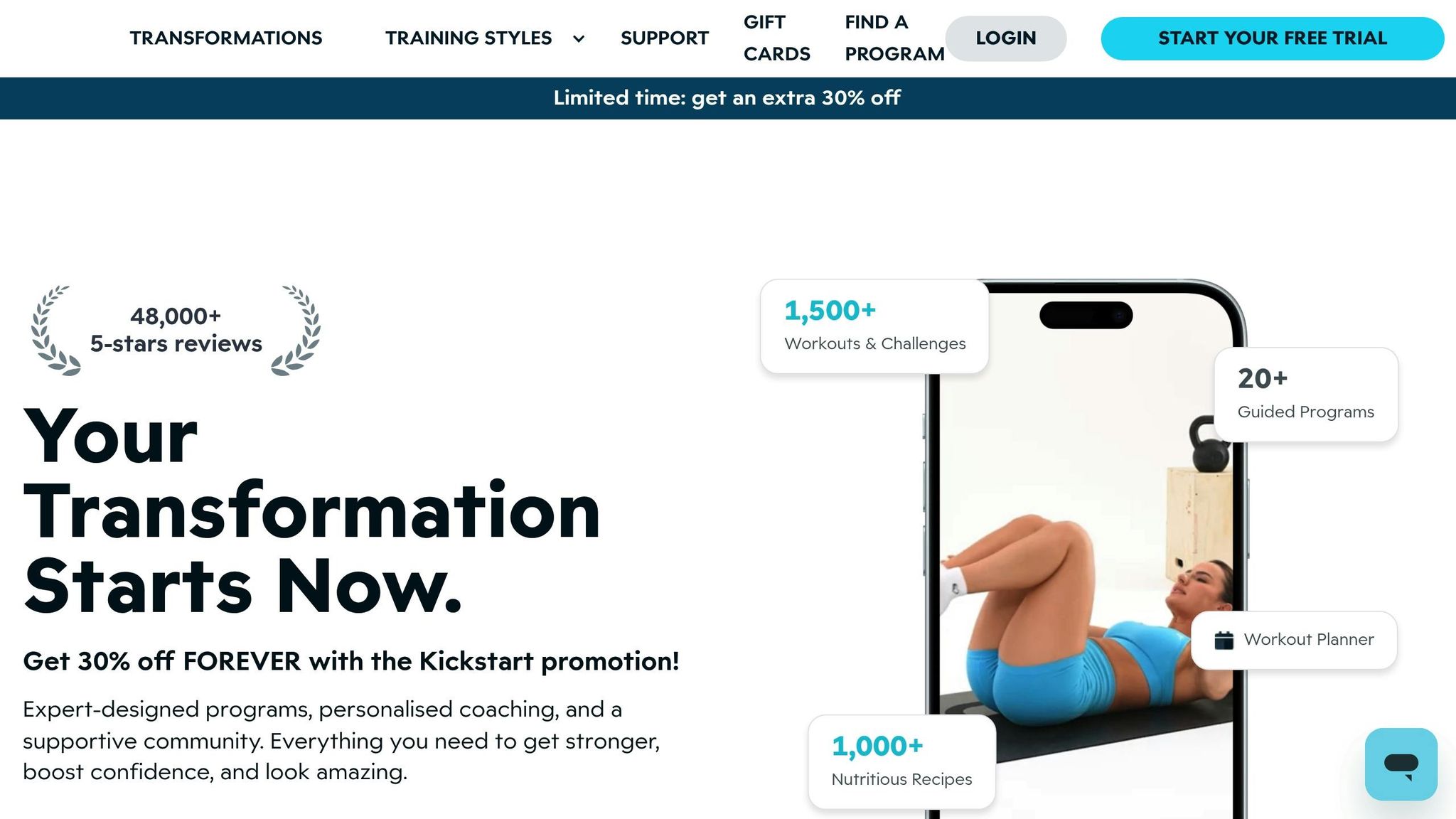
EvolveYou is a fitness platform designed specifically for women, offering a variety of workouts like strength training, hypertrophy, functional fitness, HIIT, and yoga. Founded by Krissy Cela, the app has gained a loyal following with over 2 million active users and an impressive 4.8-star rating based on 48,000 reviews.
EvolveYou stands out by offering certified trainers and personalized programs. For example, the "Yoga for Athletes" program focuses on recovery, while the 4-week Kickstart Challenge includes four workouts per week, exclusive content, and motivational messages. Beyond fitness, the app provides a library of over 1,000 healthy recipes to support users’ nutrition goals.
The app is available for both iOS and Android and costs approximately $19.99 per month. New users can explore its features with a 7-day free trial, which includes access to more than 36 workouts and challenges. Additionally, a 2026 Kickstart promotion offers a lifetime 30% discount and flexible billing options.
"EvolveYou is our pick for the best overall workout app because it has a great balance of structure, inclusivity, and versatility in one place." – Fortune
While many users praise the app, some have noted that the onboarding process can feel overwhelming due to frequent pop-ups promoting weight loss programs. However, once past this stage, both beginners and experienced athletes can benefit from the wealth of content and resources available.
7. Sweat
Sweat is a fitness platform designed specifically for women, boasting a strong community of over 1 million active monthly users. The app features a massive library of more than 13,000 workouts spread across 60+ structured programs. These programs cater to various training styles, including HIIT, strength training, Pilates, and yoga. What sets Sweat apart is its attention to different life stages, offering tailored programs for pregnancy and post-pregnancy fitness.
The subscription costs $25 per month or $135 annually, with a 7-day free trial available. As a bonus, early 2026 annual subscribers will receive an additional six months of Calm Premium and access to hundreds of recipes, complete with an automated shopping list.
One of the app’s standout features is the exercise swap tool, which provides alternative movements for each exercise, making it easy to adapt based on your equipment or workout environment. The app also integrates with Spotify and Apple Music, and users can customize weekly planners to match the gear they have on hand. This flexibility underscores Sweat’s commitment to its community-oriented approach.
As the platform puts it:
"A global community of women trained by women on a platform built by women." – Sweat
CNET recognized Sweat as the "Best for experienced trainers" in their 2025/2026 roundup, applauding its high-quality video demonstrations and intuitive interface. However, some users have mentioned that the pricing feels steep and that certain exercises within the programs can feel repetitive over time. To keep the community engaged, Sweat is launching a 4-week Sweat Challenge starting January 12, 2026.
8. SmartGym
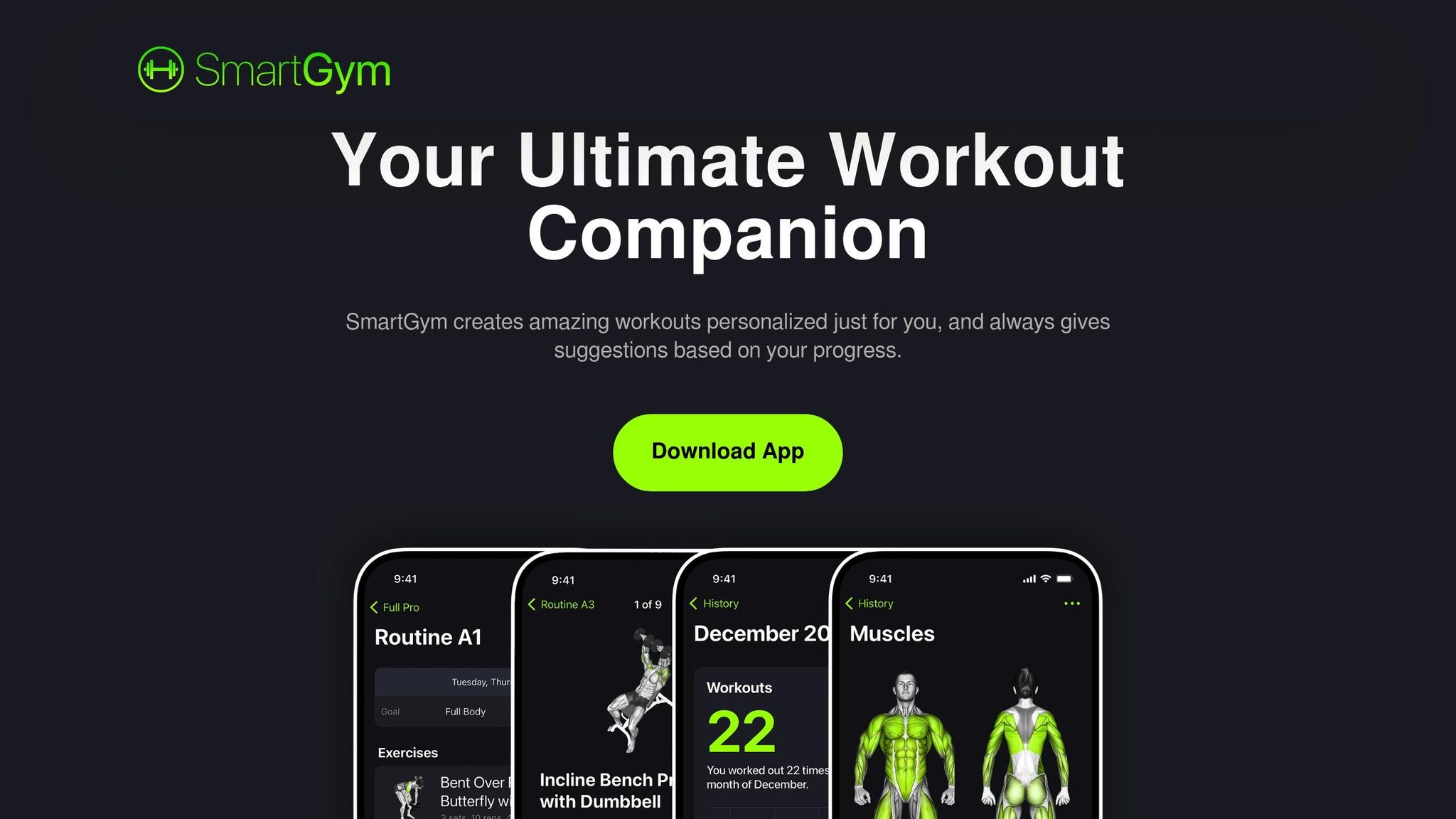
SmartGym brings AI-powered workouts straight to your wrist, tailoring routines based on your equipment, target muscles, and fitness level. Its Smart Trainer AI refines recommendations in real time, making your workouts more efficient without the hassle of constant manual adjustments. This tech-driven approach creates a smooth, modern workout experience.
The app’s standalone Apple Watch mode simplifies training, even allowing heart rate tracking through select wireless earbuds. Data automatically syncs once your devices reconnect, so you can focus on your fitness without interruptions. Plus, with a library of 690 animated exercises and 130 pre-designed workouts, there’s no shortage of variety to keep things interesting.
Launched in late 2025, SmartGym leverages Apple Intelligence to transform plain-text workout descriptions into actionable routines. It also provides automated progress tracking, motivational insights, and even augmented reality posture analysis to help you stay on track and improve your form.
SmartGym’s accolades speak volumes: it was named Apple Watch App of the Year in 2023 and became a finalist for the Apple Design Awards in 2024. With a 4.7/5 star rating from 30,000 reviews and a #1 ranking in the Health & Fitness category across 30+ countries, it’s clear users see the value. The app operates on a freemium model, offering a free version with 2 routines, 3 workouts, and 2 measures. For those seeking more, a premium subscription unlocks unlimited routines, custom exercises, and advanced analytics.
While some users have pointed out that modifying sets on the Apple Watch interface can be tricky and offline syncing between devices isn’t always perfect, SmartGym’s AI-driven features and well-integrated ecosystem continue to make it a standout in the fitness tech space.
9. Google Fit
Google Fit continues to evolve as a standout in fitness tracking, building on the momentum of earlier innovations like SmartGym. One of its most talked-about features is the Gemini-powered Personal Health Coach, which not only tracks your steps but also analyzes your health data to adjust your workout plan on the fly. For instance, if the app detects poor sleep or a higher-than-usual resting heart rate, it might recommend swapping a high-intensity run for a recovery walk. This ensures you stay active without pushing yourself too hard.
The app is neatly organized into four tabs: Today for daily updates, Fitness for weekly workout plans, Sleep for tracking nightly patterns, and Health for a broader view of your metrics. Users can chat with the coach through a simple text interface to ask questions or tweak their workouts – whether it’s substituting exercises based on available equipment or adjusting for weather conditions. With a library of over 700 movements, the AI crafts workout circuits tailored to your specific needs, making it a highly flexible tool for fitness enthusiasts.
PCMag’s Andrew Gebhart put the app to the test during Thanksgiving 2025, a time when staying consistent with fitness goals can be challenging. The AI detected his elevated heart rate and lack of sleep, suggesting a recovery walk instead of a run.
"The Google personal health coach is the first fitness tool that’s actually helped me get through Thanksgiving without completely derailing my progress toward my goals." – Andrew Gebhart, Senior Writer, PCMag
While the basic version of Google Fit is free, accessing the advanced AI coaching requires a Fitbit Premium subscription priced at $9.99 per month. As of late 2025, PCMag hailed it as "the most effective automated health coach", thanks to its trend analysis, quick 10-minute setup, and seamless compatibility with Pixel Watch and Fitbit devices. Despite a few minor glitches, it’s clear why this app stands out in the crowded fitness tech space.
10. Sports And Fitness Apps
Sports And Fitness Apps, often referred to as Fitness Online, is an all-in-one platform designed to support your fitness journey with exercise guidance, nutrition planning, and community interaction. One of its standout features is a 3D exercise library with over 850 animated tutorials. These interactive 3D models demonstrate proper form, making it easier to perform exercises correctly and safely – no personal trainer required.
The app’s free version offers impressive functionality, including custom workout programs, without needing a subscription. It also features a standalone Apple Watch mode, allowing you to leave your phone behind during workouts, whether you’re at home or hitting the gym. With availability in 17 different languages, it caters to users worldwide.
Beyond workouts, the app includes professional meal plans, detailed tracking analytics, and a social feed to connect with others. Its ability to combine interactive media with practical tools makes it a valuable companion for various training styles, helping to enhance your overall fitness experience.
App Comparison Table
The table below breaks down key features, pricing, and device compatibility to make choosing the right app easier.
| App | Primary Focus | Free Features | Monthly Cost | Annual Cost | Device Compatibility |
|---|---|---|---|---|---|
| Strava | Outdoor cardio (running, cycling, hiking) and social competition | Basic activity tracking, social feed | $11.99 | $79.99 | iOS, Android, most fitness trackers |
| Runna | Race training (5K to marathon) | Limited run tracking | $19.99 | – | iOS, Android |
| Zwift | Indoor cycling and running | Trial only | – | – | iOS, Android, PC, Mac |
| Hevy | Gym-based strength training | Freestyle workouts, basic logging | $2.99 | – | iOS, Android |
| Fitbod | Strength training with AI | Limited workouts | – | – | iOS, Android |
| EvolveYou | Women’s fitness and wellness | Trial only | – | – | iOS, Android |
| Sweat | Structured workout programs | Trial only | – | – | iOS, Android |
| SmartGym | Gym workout tracking | Basic features | – | – | iOS, Android |
| Google Fit | General activity tracking | Full access | $0.00 | $0.00 | Android, iOS (limited) |
| Sports And Fitness Apps | All-in-one fitness platform | Custom workouts, 3D exercise library | – | – | iOS, Android, Apple Watch |
Conclusion
By 2026, selecting the right fitness app comes down to matching its features with your personal fitness goals. Whether you’re drawn to Strava’s outdoor cardio tracking or the all-in-one functionality of Sports And Fitness Apps across iOS, Android, and Apple Watch, there’s something for every fitness journey. This quick overview should help you zero in on the app that aligns with your objectives.
Take a close look at the comparison table, which highlights each app’s core focus, pricing, and device compatibility. This makes it easier to find an option that suits your training style and budget. Don’t forget the practical details – like cost and whether the app works on your preferred device. Many premium apps offer free trials, so take advantage of these to explore their interfaces and see if they complement your workout routine.
FAQs
What should I look for in a fitness app to meet my workout goals?
When choosing a fitness app, it’s important to pick one that matches your personal goals – whether you’re aiming to lose weight, build muscle, boost endurance, or simply maintain a healthy lifestyle. Look for apps offering customized workout plans that adjust to your fitness level and available equipment. Tools for tracking your goals are also key, as they provide clear insights into your progress. Apps with smart coaching features – like real-time feedback or AI-based suggestions – can help you stay consistent and make necessary tweaks to your routine.
For a more complete approach, consider apps that integrate nutrition and recovery features, such as meal planning, sleep monitoring, or mindfulness exercises. Social elements like community challenges or interactive feeds can keep you motivated, while in-depth analytics (e.g., tracking reps, heart rate, or performance trends) allow you to celebrate achievements. If your schedule is packed, look for apps that sync with wearables and offer quick-log options to make tracking easier. By focusing on these features, you’ll find an app that not only supports your fitness goals but also fits smoothly into your daily life.
What are the costs of these fitness apps, and do they offer free trials?
The cost of top fitness apps typically falls within a $10 to $20 monthly subscription range, though pricing can vary based on the app and its offerings. For those looking to save, many apps also provide annual plans at a reduced price.
Most apps include a free trial period – usually between 7 and 14 days – so you can test their features before subscribing. Keep in mind, trial availability and length can differ, so it’s a good idea to check each app’s specifics directly.
Which fitness app works best with wearables like the Apple Watch or Garmin devices?
While the details here don’t pinpoint which fitness app works best with wearables like the Apple Watch or Garmin devices, it’s worth checking out apps that emphasize smooth integration. Look for options that support features such as real-time tracking, heart rate monitoring, and syncing your activities effortlessly with your wearable.